

Paint correction
Paint correction vs. ceramic coating: which does your car need?
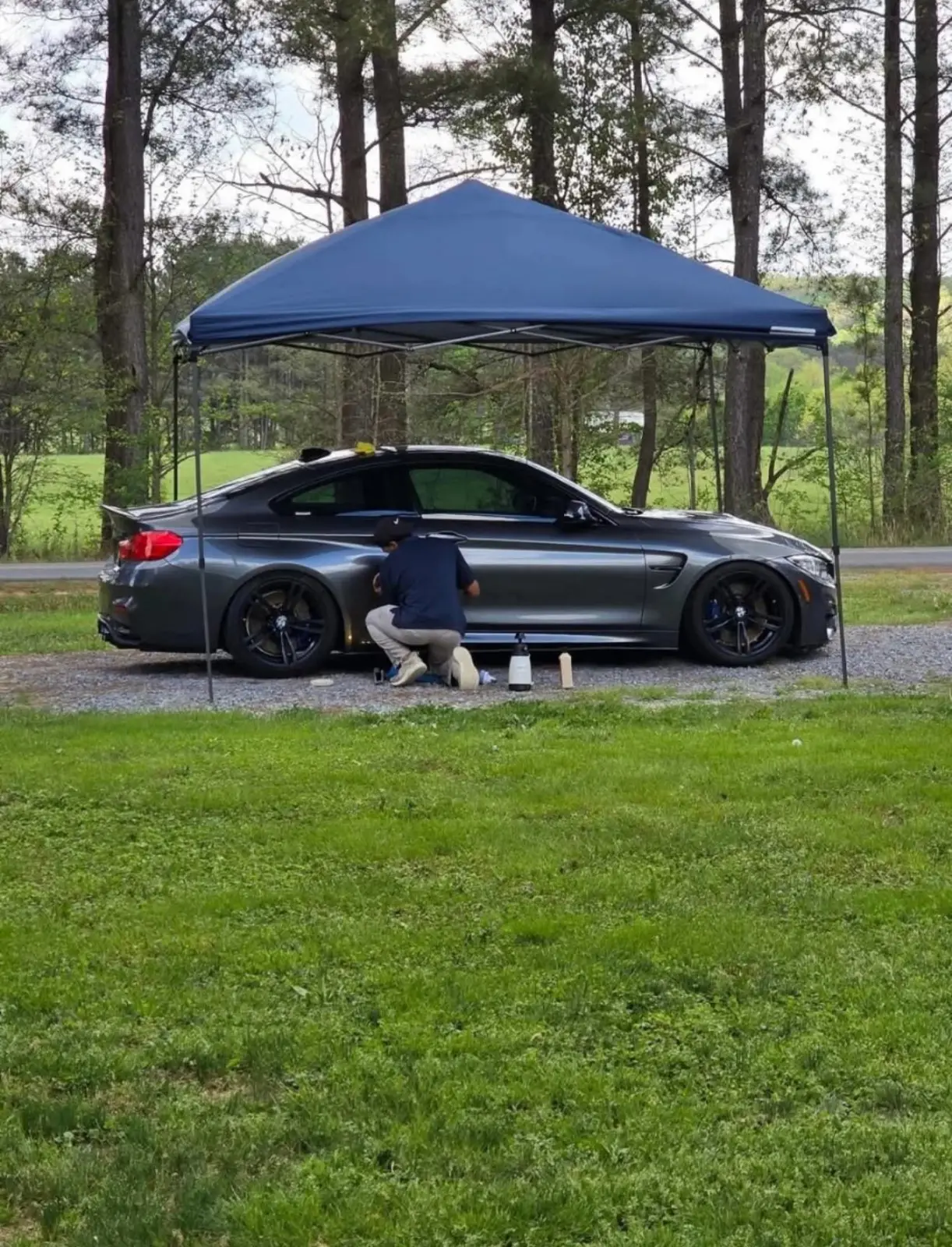
People often ask for one when they really need the other. Paint correction fixes how your paint looks. Ceramic coating protects how it looks. Here is the difference, and why the order matters.
Quick answer
If your paint has swirl marks, haze or light scratches, you need paint correction first. If the paint already looks right and you want to keep it that way, you need a ceramic coating. Most cars that are more than a year old get the best result from both: correction first, coating second.
What paint correction actually does
Paint correction is machine polishing that removes a microscopic layer of clear coat to level out defects. Swirl marks, buffer trails, water-spot etching and light scratches sit in the top of the clear coat. Polishing takes the surface down just enough that those marks disappear and light reflects cleanly again.
It is a skilled, slow process. The goal is to remove as little clear coat as possible while getting the paint as clear as possible. That is why paint correction comes in levels, from a light enhancement polish to a multi-stage correction.
What ceramic coating actually does
A ceramic coating is a liquid that bonds to your clear coat and hardens into a thin, glossy protective layer. Once cured, it makes the paint:
- Repel water, so rain and rinse water bead and sheet off.
- Much easier to wash, because dirt and pollen have a harder time sticking.
- More resistant to UV fading, bird droppings and tree sap etching.
- Deeper and glossier looking for years instead of weeks.
What a coating does not do is fix existing damage. It will not remove swirls, and it will not stop rock chips. It protects whatever is underneath it, flaws included.
Why correction has to come first
Think of a coating like a clear glass case. If you put a scratched object inside, you now have a scratched object that is very well protected. Coating over swirled paint locks those swirls in for the life of the coating, and you would have to polish the coating off to fix them later.
That is why every Formula 4 ceramic coating package includes machine polishing before the coating goes on. The level of polishing depends on your paint.
How to tell what your car needs
Take your car into direct sunlight, or shine a phone flashlight at the paint at night. Then look closely:
- Circular spiderweb scratches around the light? Those are swirl marks. You need correction.
- Paint looks dull or cloudy instead of deep? Correction will bring the gloss back.
- Looks clean and sharp, maybe a few faint marks? An enhancement polish plus a coating is likely enough.
- One deep scratch you can catch with a fingernail? That may need spot scratch removal, or may be too deep to polish out safely.
Can you do one without the other?
Yes. Paint correction on its own will make your car look dramatically better, but without protection the finish starts picking up new marks from washing right away. Our standalone paint correction services each include a complimentary ceramic sealant so the result holds up longer.
A coating on its own makes sense on a new or near-perfect car. Even then, we still polish first, because new cars often arrive with dealer wash marks. More on that in is ceramic coating worth it on a new car?
What it costs
Our paint enhancement starts at $400 and spot scratch removal starts at $85. One-step and two-step corrections are quoted after we see the car, since paint condition varies so much. Ceramic coating packages start at $808.99 with polishing included. See how much ceramic coating costs in Atlanta for the full breakdown.
Not sure which one you need?
Text us a few photos of your paint in the sun and we will tell you honestly whether you need correction, a coating, or both.
Text us photosKeep reading
One-step vs. two-step paint correction explained →How much does ceramic coating cost in Atlanta? →How to wash a ceramic coated car →